U.S. Soccer's Uncertainty on Infantino Endorsement Signals Potential Shift
- Gate
- Basketball
- Departs
- Crew
- Ava Hult
- Passengers
- 914
U.S. Soccer CEO JT Batson sidesteps endorsement questions concerning Gianni Infantino, raising implications for future governance in global soccer.
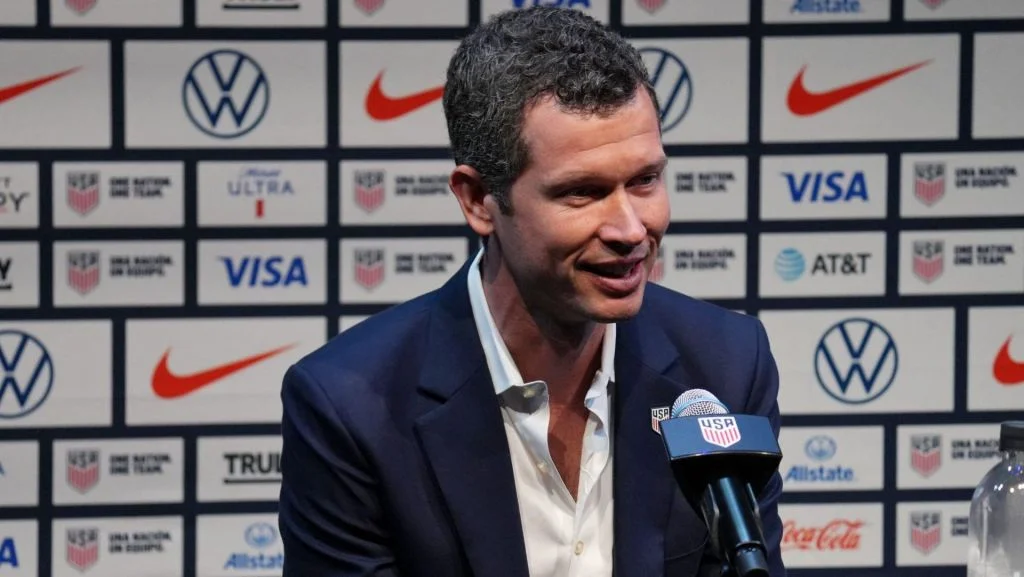
U.S. Soccer CEO JT Batson navigated a tricky landscape of questions regarding the federation's endorsement of FIFA President Gianni Infantino's reelection during a recent press event. His non-committal responses came after U.S. Soccer publicly aligned with CONCACAF in opposing Infantino's controversial attempt to sell World Cup interests to private investors, a move that has raised eyebrows across the soccer community.
At a press conference introducing Larry Berg as the new commissioner of Major League Soccer (MLS), Batson emphasized U.S. Soccer's solidarity with CONCACAF, stating, “As we shared publicly, we supported Concacaf’s statement on Friday with regards to the FIFA Forward Enterprise.” This sentiment echoed a social media post where U.S. Soccer articulated its stance, backing CONCACAF's rejection of the FIFA Forward Enterprise proposal.
Opposition to FIFA Forward Enterprise
The backdrop to this unfolding situation is significant: CONCACAF, representing 41 member associations, outright dismissed Infantino's proposal last Thursday, voicing “deep concerns about the lack of due process surrounding the proposal” along with critiques regarding a short deadline and inadequate review by FIFA's governance bodies. This opposition is pivotal, not just for CONCACAF but also for U.S. Soccer's potential role in reshaping discussions around FIFA leadership.
When pressed on the implications of this backlash for U.S. Soccer’s stance, Batson pointed to an upcoming board meeting scheduled for September. “We have a board meeting in September where one of the topics will be discussing what the best future is for global soccer,” he noted, suggesting that these discussions could lead to a strategic shift in U.S. Soccer’s relationship with FIFA and its current leadership.
Potential Withdrawal of Endorsement
Infantino has received endorsements from more than 200 of FIFA’s 211 member associations, a hefty backing as he approaches the next election. Reportedly, not only did all 41 Concacaf members endorse Infantino prior to the World Cup, but U.S. Soccer is now grappling with the idea of potentially withdrawing its support, a position it appears hesitant to define publicly. In light of recent developments, several European federations have rescinded their endorsements of Infantino, and it remains to be seen whether a similar trend will occur among CONCACAF countries.
While Batson declined to confirm whether U.S. Soccer had indeed submitted a letter of support for Infantino, he responded ambiguously to questions about potential withdrawals, merely stating, “I haven’t seen that story, so it’s hard for me to comment on it.” This ambiguity invites speculation about U.S. Soccer’s internal discussions and stance ahead of the November 18 nomination deadline for FIFA elections.
The Challenge of Montagliani
The mention of Victor Montagliani, President of CONCACAF and a prospective challenger to Infantino—who has yet to announce his candidacy—adds another layer to the intrigue. Batson's evasiveness in addressing whether U.S. Soccer might back Montagliani further indicates a potential re-evaluation of partnerships and alliances within the global soccer governance structure.
Looking ahead, Batson highlighted the upcoming Women's World Cup in 2027 as a significant point of discussion for U.S. Soccer, implying a focus on what frameworks will best promote success in the sport. “So we’re starting with that,” he remarked. “Those discussions have kicked off. It’s going to be a fun and interesting discussion.” The emphasis on the Women’s World Cup signals U.S. Soccer’s commitment to broader, inclusive considerations within global soccer development.
Historical Context of Support
Historically, U.S. Soccer's support for Infantino is not a new development; during his initial run for FIFA president in 2016, U.S. Soccer endorsed him after first supporting Prince Ali bin Al Hussein. This prior alliance makes the current hesitation surrounding fresh endorsements—or potential shifts—particularly striking, as it underscores a pivotal moment for U.S. Soccer in defining its future role and influence on the global stage.
As the landscape shifts and discourse surrounding FIFA leadership evolves, the decisions made by U.S. Soccer in the coming months will undoubtedly impact its positioning and influence. The federation's chairman and CEO appear to be in a critical phase of reassessment as they align their strategies with the broader landscape of international soccer governance.


