NWSL's Louisville Club Faces Uncertainty as Commissioner Berman Commits to Finding Solutions
- Gate
- Basketball
- Departs
- Crew
- Margaret Fleming
- Passengers
- 621
With Racing Louisville at a crossroads, Commissioner Jessica Berman addresses the club's future amid potential relocation talks and ownership challenges.
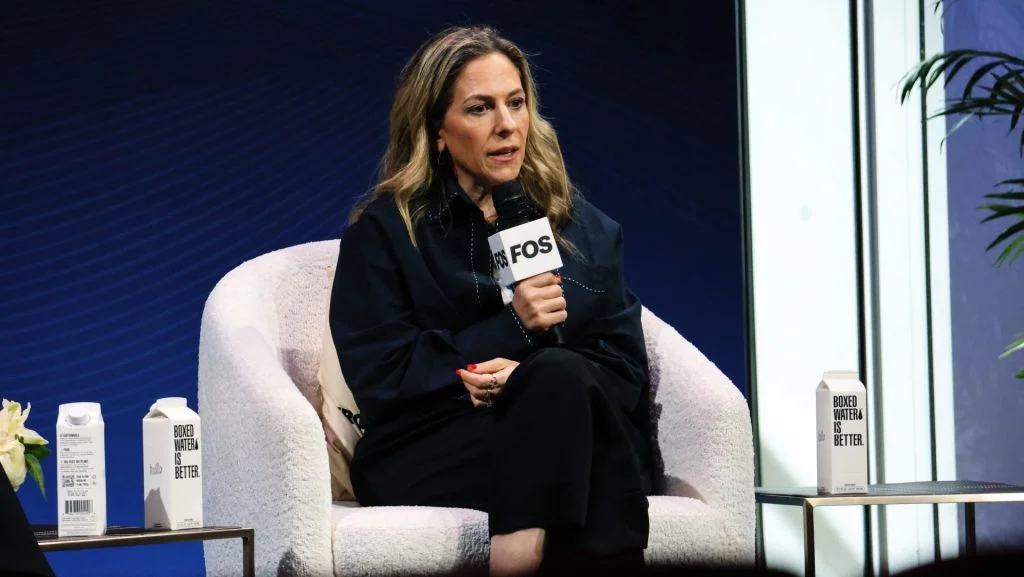
As the NWSL season draws to a close, Racing Louisville finds itself precariously perched on the edge of uncertainty regarding its future, particularly with discussions of a potential relocation to Cincinnati looming overhead. The urgency to resolve this situation is palpable, and NWSL commissioner Jessica Berman is stepping up to the plate, declaring, “It’s my job to work with them to find solutions.”
During her appearance at the Front Office Sports Tuned In summit, Berman emphasized that the expectations for NWSL teams have evolved significantly since Louisville joined the league five years ago. “In order to keep up with the demands and expectations of our league, there is an expectation that is not in any way rationally related to the expectations that existed five years ago,” she stated. This reflects a broader trend in women's sports, where investments and support are scaling rapidly, leaving some franchises at risk if they can't adapt quickly enough.
Attendance Challenges and Critical Decisions
The situation for Racing Louisville is exacerbated by its historically low attendance, which has drawn scrutiny from both ownership and fans. Ownership group chair John Neace communicated to local leaders in August that drastic measures might be necessary if the team’s fan engagement fails to improve. This dire situation could involve exploring ownership changes or even relocating to a more lucrative market.
Recently, ESPN reported that the ownership group of FC Cincinnati, an MLS franchise, has engaged in discussions aimed at the potential relocation of Racing Louisville. Such a move could reshape the dynamics of the NWSL, impacting both local and league-wide fanbases.
Racing Louisville operates under Soccer Holdings, which also owns the second-division side Louisville City FC. The two teams share training facilities as well as the Lynn Family Stadium, which has a capacity of 15,000. Despite these advantageous infrastructural resources, Racing Louisville has struggled since its inception, securing just one playoff appearance since its 2021 arrival in the league. Such underperformance puts the club's future into sharper focus and makes discussions about relocation all the more urgent.
The Changed NWSL Landscape
Over the past five years, the NWSL has undergone profound changes in its financial structure and market value. Five years ago, Racing Louisville's ownership group paid between $1 million and $2 million as an expansion fee. In stark contrast, new teams like the Columbus Crew’s owners, the Haslam family, shelled out a staggering $205 million to join the league this year, reflecting a significant shift in the league's valuation and the financial commitment required from its franchises.
Berman elaborated on the rapid growth of the NWSL, noting how the facilities in Louisville, initially seen as cutting-edge during her first visit as commissioner, now seem almost outdated compared to newer standards in the league. “I was amazed on my first site visit... Louisville was actually the leader in our league for infrastructure, and that just shows you how quickly this league has changed,” she remarked. This rapid development underscores that clubs not only need to improve performance on the pitch but also enhance off-field operations to remain competitive.
Expansion and Future Prospects
The NWSL expanded to 16 teams this season and will further grow to 18 by 2028 with the addition of teams in Atlanta and Columbus. Nonetheless, the league isn't pausing there; active conversations are underway with potential new markets looking to enter the league as the 19th and 20th teams. This provides a backdrop of aggressive growth, leaving Louisville in a challenging position if it cannot clear the current hurdles.
Interestingly, Cincinnati was passed over in the latest expansion round, though its potential as a relocation site remains on the table. Berman highlighted the city's viability, calling it “an example of an MLS owner who has proven that they can operate a best-in-class organization in another league." She indicated that discussions will continue with those interested in enhancing the NWSL landscape, suggesting that Louisville's trajectory may hinge on the outcomes of these conversations.
As Berman works to untangle the complexities surrounding Racing Louisville, the implications are enormous not just for the club but for the entire league. The decisions made in the coming months will shape the landscape of women's soccer in the region and could determine how the NWSL positions itself against a backdrop of evolving expectations, financial investments, and competitive aspirations.
The fate of Racing Louisville hangs in the balance, and the path forward will have ramifications not only for the team itself but also for the broader NWSL community. How this situation resolves could set precedents for franchises navigating similar challenges now and in the future.


