FIFA Under Fire as Key Confederations Question Infantino's Leadership
- Gate
- Football
- Departs
- Crew
- Margaret Fleming
- Passengers
- 346
Infantino faces mounting pressure from major soccer confederations, calling out his leadership and the botched FIFA Forward Enterprise proposal.
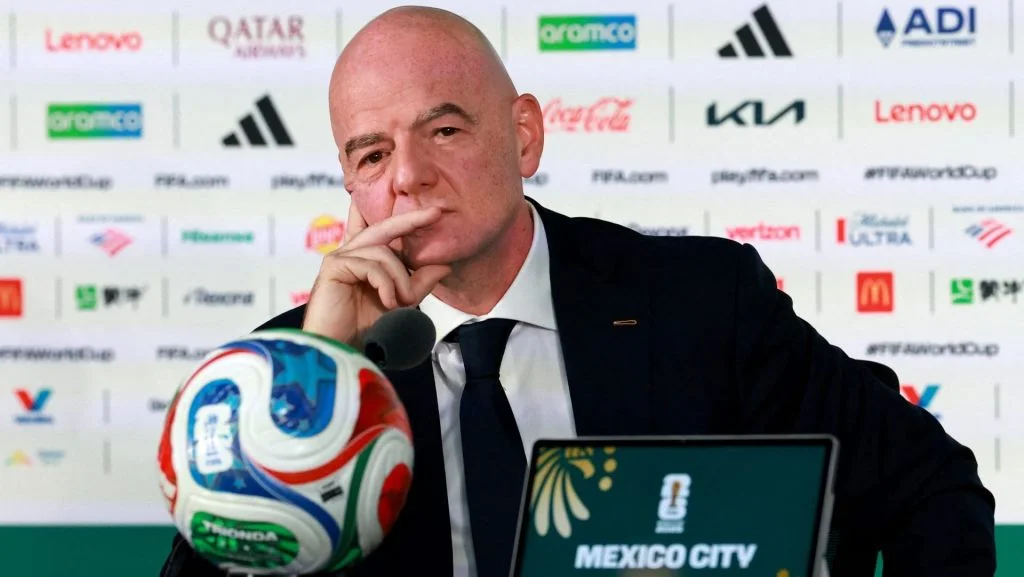
The presidents of Europe, North America, and Asia’s soccer governing bodies have united in a striking condemnation of FIFA president Gianni Infantino, citing a major leadership crisis as their grievances come to light. Their harsh joint statement accuses Infantino of “deception” following the failure of the FIFA Forward Enterprise (FFE), an initiative aimed at bringing in outside investment to commercialize the World Cup.
This open letter, released on Monday, reflects a significant moment in the ongoing fallout from FFE’s collapse, particularly as Infantino gears up for his reelection bid in March. Among the signatories are UEFA’s Aleksander Čeferin, CONCACAF’s Victor Montagliani, and the AFC’s Salman bin Ibrahim Al Khalifa—all influential voices who also hold vice-presidential positions within FIFA. The collective discontent underscores a palpable divide in global soccer governance.
Critics assert that FIFA’s approach following the FFE's demise has been riddled with miscommunication and fearmongering. After an intense emergency meeting in Morocco on August 5, FIFA issued an apology for the secretive nature of FFE and promised a review. Yet, just days later, a vehement rebuttal denounced ongoing attempts to malign Infantino and the organization, particularly in light of allegations suggesting questionable dealings during Infantino's tenure at UEFA prior to his presidency.
The crux of the joint letter from the continental leaders argues that the fallout from FFE isn’t merely a procedural error, but rather a “profound failure of judgment”—a serious breach of trust with the very institutions FIFA is supposed to represent. This sentiment reflects a deep-rooted frustration over a lack of accountability from FIFA’s leadership.
Moreover, the letter criticizes the recent meeting in Morocco for its exclusivity, highlighting that only one elected official was present, which raises questions about the transparency and inclusivity of FIFA's governance. The confederation leaders proposed that an independent third party should oversee any review process, advocating for an approach that they believe would restore confidence in FIFA's operational integrity. “It is not the conduct of a custodian of the game, but of one who believes the game is answerable to him,” they stated, underscoring a growing fatigue with Infantino’s leadership style.
In response to the outcry, U.S. Soccer released a statement aligning itself with the other CONCACAF bodies—barring Mexico—in pushing for “meaningful change” within FIFA’s governance framework. U.S. Soccer CEO JT Batson has walked a fine line regarding his support for Infantino, revealing that the federation’s board will discuss this issue in their upcoming meeting. This hesitance reflects a broader uncertainty among national federations on whether to back the embattled leader.
With UEFA leading the charge against Infantino and promoting a boycott of FIFA events, both CONCACAF and the AFC have echoed similar sentiments, pressing for significant accountability and reforms in FIFA’s operations. Montagliani’s name has emerged as a potential challenger for the presidency, although he has yet to declare his candidacy. His leadership role within CONCACAF since 2016 provides him with a solid foundation for any election challenge.
It’s important to point out that while the actions of these three confederations express significant dissent, they do not necessarily represent the entirety of their respective member associations. Several federations within both AFC and CONCACAF—including Mexico, Lebanon, and the UAE—have reiterated their support for Infantino, demonstrating the complexities of alliances within FIFA’s broad membership. Indeed, with 211 FIFA member associations globally, the three confederations collectively comprise a substantial faction, wielding influence beyond mere numbers.
Meanwhile, the African (CAF), South American (CONMEBOL), and Oceanian (OFC) confederations appear more supportive of Infantino, with CAF recently voicing unanimous backing. CONMEBOL remains cautious, indicating it will not support a hasty campaign to oust him. This complex interplay points to a multilayered consensus dynamic within FIFA and highlights the varying levels of political maneuvering present as Infantino's presidency reaches a pivotal juncture.
As the March election approaches, the tense relationship between Infantino and key confederation leaders will undoubtedly play a crucial role in shaping FIFA's future direction. The critical comments from UEFA, CONCACAF, and the AFC serve as more than just rebukes; they signal a call for profound reflection on FIFA's governance, accountabilities, and the essential nature of trust within the game of soccer.
The post Infantino Blasted for ‘Deception’ by FIFA Vice Presidents appeared first on Front Office Sports.


