UEFA Lifts FIFA Boycott, Setting Stage for Women's U-20 World Cup Amid Ongoing Tension
- Gate
- Football
- Departs
- Crew
- Margaret Fleming
- Passengers
- 638
UEFA is set to lift its boycott of FIFA tournaments, including the upcoming Women's U-20 World Cup, while tensions with FIFA President Infantino continue.
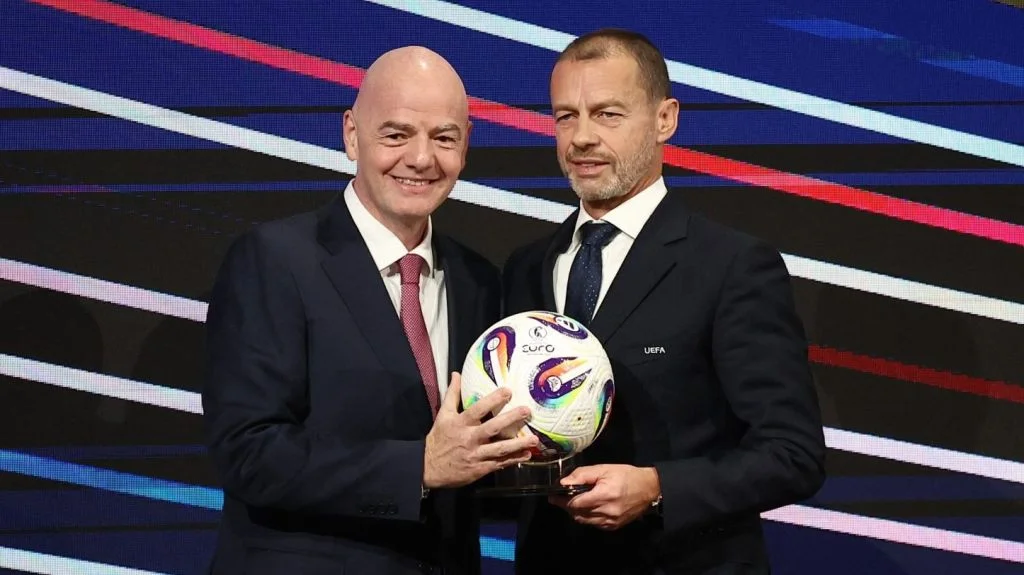
UEFA's impending decision to lift its boycott of FIFA tournaments marks a significant shift in relations between Europe's football governing body and FIFA, particularly ahead of the Women's U-20 World Cup scheduled to kick off in Poland on September 5. The controversy arose initially when FIFA President Gianni Infantino proposed a plan that would allow private investment into World Cup stakes, a move that UEFA swiftly labeled as an affront to the integrity of the game.
This conflict reached a fever pitch in late July, when UEFA openly considered withdrawing from all FIFA competitions. Their concerns stemmed from the commercial implications of Infantino's proposal, which threatened to alter the nature of the World Cup. UEFA’s leadership demanded assurances from FIFA that such a proposal would never appear again, resulting in a temporary stalemate.
However, following Infantino's announcement on July 31, retracting his controversial proposal, UEFA initially maintained its boycott status. On August 6, they reiterated that without concrete assurances, they were prepared to continue their withdrawal from FIFA competitions. This was not merely about the men’s World Cup; the implications extended to youth tournaments as well, hence casting a shadow over the Women's U-20 World Cup.
Assurances Received
Reports from both The Times and Sky Sports indicated that UEFA would inform its member associations during a crucial meeting in Monaco about receiving the necessary promises from FIFA to call off its boycott. Following this meeting, UEFA officially declared that the boycott would be lifted while still condemning Infantino’s earlier proposal as a “profound failure of judgement” and a misuse of power. They also hinted that support for Infantino’s presidency could dissipate further if the governance issues present in FIFA are not addressed.
UEFA's statement clearly stated that while they were lifting the boycott to allow participation in the upcoming tournaments, underlying issues remain unresolved. This indicates an ongoing tension that will likely resurface, especially with the FIFA presidential elections approaching in March 2024, where Infantino’s potential re-election could ignite further dissent among UEFA's leadership.
Impact on Upcoming Tournaments
The initial stages of this conflict threatened to disrupt the Women's U-20 World Cup, where qualifying teams were left in limbo due to UEFA's boycott. In light of the recent resolutions, FIFA expressed happiness that all qualifying teams will participate, emphasizing its belief in football’s power to unite. Yet, the backdrop of this tournament will carry the weight of the ongoing disputes surrounding governance and integrity in football.
Despite lifting the boycott, UEFA's president, Aleksander Čeferin, remains vocal about the need for reform within FIFA's governance. In a recent podcast appearance, he stated that should Infantino not step down voluntarily, UEFA and its allied confederations would ensure a challenger emerges for the presidential elections. This conveys a sense of urgency among European football leaders to regain control over football’s direction.
Future Implications
The political landscape within football remains turbulent. UEFA's joint letter with leaders of the North American and Asian confederations has highlighted the need for accountability in FIFA’s governance, aiming to prevent a similar situation from arising in the future. As national federations voice support or dissent regarding Infantino, the football community is bracing itself for an intense electoral period ahead of FIFA's November 18 deadline for submitting candidates for the election.
One of the names rumored to potentially stand against Infantino is Victor Montagliani, the president of CONCACAF, though he has yet to announce his candidacy. The stakes are high, and UEFA's renewed stance appears to set the stage for a pivotal chapter in FIFA’s governance structure. As football stakeholders prepare for future tournaments, all eyes will be on how this internal strife unfolds and impacts the world's most popular sport.
The lifting of the boycott is a critical development, allowing the Women’s U-20 World Cup to proceed unimpeded. However, with the underlying political tensions remaining unresolved, the football community will need to navigate this complex landscape carefully in the lead-up to the elections and beyond.


